A&A INSIGHTS
Don't Route Every AI SaaS Inquiry to a Sales Call: Separating Self-Serve From Tailored Proposals
Before adding booking links, ask three questions: purpose, seats, and required integrations. Separate self-serve users from buyers who need design help, reading Lovable's stories as a hypothesis for small AI SaaS teams.
日本語で読む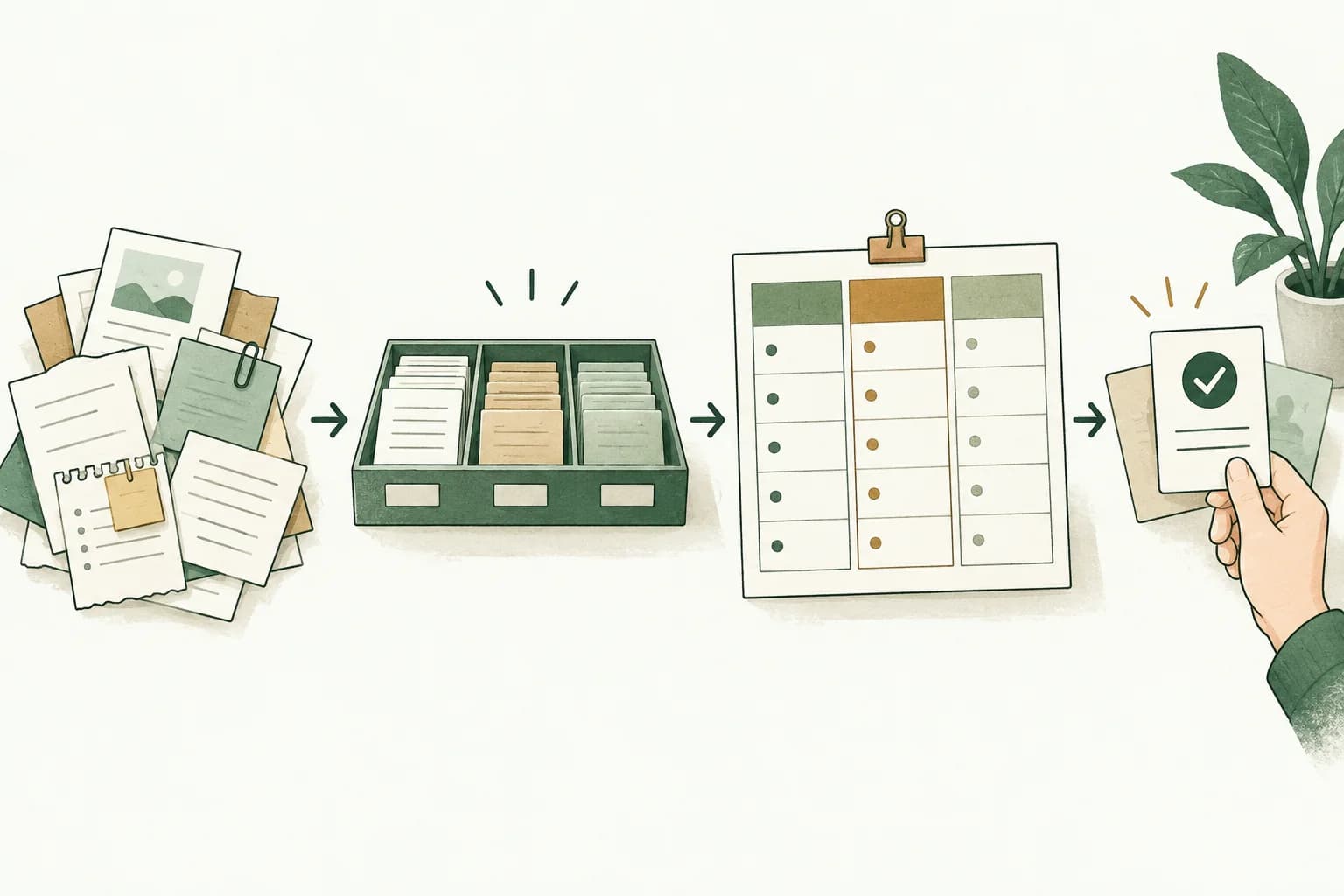
THE STARTING POINT
For founders of small AI SaaS teams whose inbox growth is eating build time, this article reads the Lovable customer stories published by Clay and Stripe as structure for separating self-serve users from buyers who need design support. Both are vendor-published accounts, not independent audits, so the piece does not turn a large team's system into hiring or revenue evidence. Instead it proposes, as an A&A hypothesis, three form questions, conditions for when the founder steps in, and a scaled-down pre-meeting brief, plus a simple monthly review of misroutes.
A mixed inbox quietly eats your build time
A&A perspective
For a founder who also runs sales, a growing inbox should be good news. In practice, personal how-to questions and corporate deployment inquiries land in the same form, and the more carefully you answer everything, the more build time disappears. If you simply add more booking links at this point, conversations with no purchase intent will fill your calendar. The decision to make first is not how to get more meetings. It is where to separate people who can proceed with guidance alone from people who need help designing their setup.
From the sources
This mixture is not a small-company problem. Clay's customer story says of Lovable that "Enterprises, startups, and individual builders were flooding Lovable's inbound channels." The same story describes the challenge as guiding individual users down the self-serve path while connecting enterprise buyers to the sales motion that matched their use case.
The Clay story: research right after submission, briefs before meetings
From the sources
According to the story, when a prospect submits Lovable's enterprise form, Clay researches the company in real time: its industry, the person's role, whether an existing relationship exists, and what the company's current priorities are likely to be. Based on that context, the system matches the prospect to the rep best positioned to help, and reps receive a pre-built brief covering who the company is, what tools it uses, what problems it is likely solving, and which products are most relevant.
From the sources
Looking back, the story says Lovable previously lacked an efficient way to qualify, research, and route thousands of inbound leads in real time with a lean team. The stated goal was to connect every company that reached out to the right person, with the right context, as fast as possible.
A&A perspective
A caution is needed here. This article is the vendor's own customer story, not an independent audit. The reported fifty percent increase in qualified meetings per rep is the vendor's claim. Lovable is also a company of roughly 150 people with a dedicated AI Ops engineer. None of this should become your basis for hiring plans or revenue forecasts. What a small team can borrow is not the scale but the sequence: assemble facts right after submission, and hand over context before the conversation.
The Stripe story: a free tier coexists with team features
From the sources
Stripe's customer story explains that Lovable spun up a range of subscription plans around launch, including a free tier for individuals and paid tiers with graduated levels of monthly usage credits and specialised features. It also says the company later expanded its offerings to plans with shared workspaces, higher resource limits, centralised access management, and other features. This is a design that separates, at the product level, a path where an individual can start alone from the capabilities that organisational use requires.
From the sources
The same story reports that Lovable has millions of usage-based billing subscriptions on Stripe, with 4.6 million credits granted each month. Numbers at this scale are the vendor's report, not a target for a small business. What the description does confirm is that a large self-serve user base and a buyer segment asking for administrative features can coexist inside the same product.
A&A perspective
In other words, routing is not only inbox triage. It is also pricing and feature design. Individuals move forward through a free tier and documentation, while organisations that need sharing and administration enter a different conversation. Applying this two-layer structure to a small AI SaaS is an A&A hypothesis. You do not need to recreate Stripe's billing stack. You start by separating, at the entrance, people who can begin with guidance alone from people who need design support.
Three questions that do the routing
A&A perspective
Translated for a small team, the research fields in the Clay story reduce to three questions you can ask directly on the form. First, the purpose of use: personal experiment or company workflow. Second, the number of people who will use it: one seat or several. Third, required integrations: existing tools, single sign-on, or security requirements. At this scale you do not need a data provider. You can simply ask the person.
Hypothetical example
As a fictional example, imagine a two-person AI SaaS adding three items to its form. Purpose is chosen from "trying it personally," "using it for company work," or "still comparing options." Expected seats are entered as a number, and required integrations as free text. An individual with no integration needs gets a reply pointing to documentation and the pricing page. A company inquiry with seats and integrations filled in gets a personal reply from the founder that quotes those answers. This is a design example for testing, not a result achieved by Lovable.
A&A perspective
Keep the founder-involvement condition narrow: any one of company use, multiple seats, or integration and security requirements. The self-serve condition is individual use with no integrations. When answers are ambiguous, let the person start with guidance and keep a path to escalate later. The goal is not a bigger gate for meetings. It is making the founder's hours reach buyers whose purchase depends on design decisions.
Compress the pre-meeting brief to one screen
A&A perspective
The pre-meeting brief idea also works at a smaller scale. Before the founder gets on a call, they should see the three answers plus what the prospect has already tried and where they got stuck. "Match to the best-positioned rep" becomes, for a one-person company, a binary: does this reach the founder with context, or not reach the founder at all. Deciding not to hand something over is also a routing outcome.
Hypothetical example
Continuing the fiction: a company that answers "eight seats, needs SSO and Slack integration" gets a call where the founder checks fit with that company's workflow. An individual asking how to write better prompts gets a link to documentation and a template. Both receive fast replies, but only one consumes founder hours. That difference is what protects build time.
What to measure, and what not to claim
A&A perspective
For one month, count inquiries in two buckets, self-serve and founder-handled, and record misroutes in both directions: calls that documentation could have covered, and guided replies that actually needed a call. Also keep the hours the founder spent on calls and the time to first reply. Lovable's numbers are a vendor report from a company at a different scale, so they cannot serve as your baseline.
A&A perspective
Do not treat a rising inquiry count as proof of demand, and do not estimate conversion or revenue lifts from these two stories. If self-serve users keep asking the same question, the fix belongs in the product's own guidance. If enterprise conversations stall, the routing questions themselves may be wrong. Review the conditions once a month and keep a record of every change.
Before adding more booking links, split the path with three questions: purpose, seats, and required integrations. Lovable's two stories can inform your structure, but they will not become your numbers. Ask small, route by conditions, record, and revise. That order is what carries the founder's hours to conversations where a purchase is actually at stake.
Sources & editorial note
Primary pages read for this article. Publication dates below belong to the sources; access dates record our research.
- How Lovable uses Clay to scale one of the fastest-growing startups in history
Clay · n.d.
Accessed 2026-09-22 - Riding the AI boom: How Lovable grew into a vibe-coding juggernaut with Stripe
Stripe · n.d.
Accessed 2026-09-22
AI-assisted editorial production
A&A uses AI for research, writing, translation and editorial checks. Source facts, our analysis and hypothetical examples are labeled separately.
Editorial check: 2026-09-22