Repurpose an article for social and hiring with AI: same facts, new claims
Put the evidence in one shared memo for AI, and rewrite the claim and example for each reader.
Key points
- Per format, name reader and decision
- Give AI a memo flagging unproven results
- Change claim and example for each reader
- Check against the memo before posting

Contents
Before expanding, write each format's reader and decision

A&A perspective
Before you turn an article into other pieces, write one line for each format: who reads it, and what they will decide after reading. Here, expanding an article means taking the material of one finished article and writing new text for a different reader, such as a social post or a hiring post.
A&A perspective
A post that only shortens the article still answers the decision of the original article's reader, yet it reaches a different reader. Shortening an article written for customers does not answer what a job candidate wants to know.
From the sources
Google, which runs the search engine, lists questions in its guidance for site owners to help them assess their own content. One asks whether someone will leave feeling they have learned enough about a topic to help achieve their goal.
A&A perspective
That guidance is written for pages that appear in search. Automate & Augment (A&A), the company writing this article, applies it to social posts too, reading the goal in that question as something that differs by reader.
Hypothetical example
For example, suppose an article explains what to watch for when using AI to build sales reports for a company that runs classes at several locations. For an owner-facing social post, the line is: "The owner who reads it decides what to prepare before asking for the report to be rebuilt."
Hypothetical example
For a practitioner explainer, write: "The staff member who reads it decides where to split the calculation from the AI's explanation." For a hiring post: "The candidate who reads it decides whether this company's way of checking fits how they want to work."
A&A perspective
A person writes this line, not AI, because only the company knows whom it wants to decide what. For an announcement, where the reader and the decision are the same as in the original article, shortening is enough.
Give AI the facts and the results you cannot claim yet, kept apart

A&A perspective
When you ask AI for drafts, give it a shared memo instead of the whole article, with source facts kept apart from results you cannot claim yet. The shared memo is one page that every piece made from the article relies on: it records the evidence and how far the claims go.
From the sources
Anthropic writes that the information given to AI must be treated as a finite resource with diminishing returns: the more you add, the less each piece helps. It describes good design as finding the smallest set of high-signal information that makes the desired outcome most likely, and notes that minimal does not necessarily mean short.
From the sources
Anthropic also writes that vague instructions fail to give AI concrete signals and falsely assume context that was never shared.
A&A perspective
Anthropic's article is a technical piece for developers who build systems that use AI, and it does not discuss adapting articles for different readers. Even so, A&A thinks its idea of narrowing what you give AI also applies to the shared memo used to expand an article.
A&A perspective
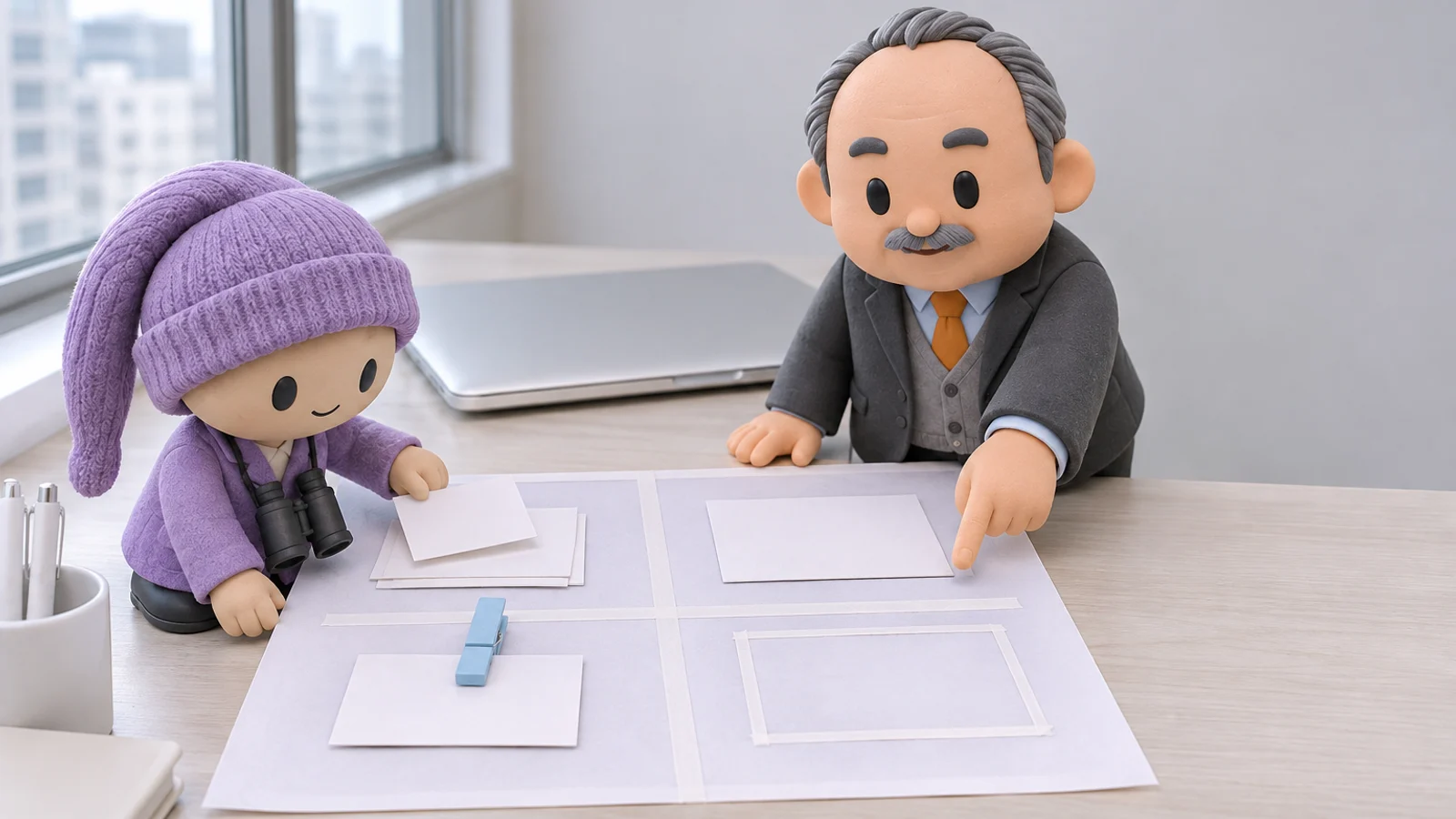
A&A recommends writing the memo in four fields: what the sources say, the article's claim and its scope, a note that the examples are hypothetical, and the results you cannot claim yet.
Hypothetical example
For the sales report article, the claim is "Reduce the mismatched numbers that stall a decision, rather than perfecting the table." The hypothetical example is a refund booked to the wrong month, so the owner cannot decide whether to add more sessions of a popular class.
Hypothetical example
The field for results you cannot claim yet says: "There is no record that profit went up." With that line in place, if AI adds a result to a piece made from the article, you can catch it by checking against the memo.
A&A perspective
Leave the article's draft history, internal discussion notes and client terms out of the memo. Give AI only the one line per format and the memo. This also makes it harder for information that must not appear in public text to slip in.
Rewrite the claim and example to fit what each reader decides

A&A perspective
The memo stays the same, but the claim and the example are rewritten for each format, to fit what its reader decides. The evidence does not change; what you assert and which scene you show do.
From the sources
Google's guidance also asks whether content that draws on other sources avoids simply copying or rewriting them, and instead provides substantial additional value and originality.
From the sources
Anthropic recommends against stuffing a long list of edge cases into an instruction to AI. Instead, it recommends choosing a set of diverse, canonical examples.
A&A perspective
A&A applies Google's question to the pieces it makes from its own articles too. It does not stop at rewording: it chooses the claim and example again for each reader, and narrows the examples given to AI to one or two typical ones per format.
Hypothetical example
In an owner-facing social post, the reader decides what to prepare before asking for the report to be rebuilt. The post opens with a problem, "The sales table for each store is done, but I still can't decide whether to add more sessions of the popular class," and asserts: "Before building the table, write down one thing the meeting needs to decide." It leaves technology out.
Hypothetical example
In a practitioner explainer, the reader decides where to split the calculation from the AI's explanation. The claim is "Calculate amounts with fixed rules and have AI write only the explanation." The example is the same refund booked to the wrong month: the rules decide the month, and AI only writes the reason.
Hypothetical example
In a hiring post, the reader decides whether this company's way of checking fits how they want to work. The claim is "Check separately that the table is done and that its numbers match the original records." The post explains why the job includes checking refund months against the original records even after the report is built.
A&A perspective
The three pieces assert different claims and show different scenes. Even so, all three rest on the same memo.
Before posting, check that no hypothetical example became a result

A&A perspective
Before posting, a person checks each AI draft against the shared memo to make sure no hypothetical example has turned into a claimed result. Three things are checked: the hypothetical examples, the numbers and the scope of the sources.
From the sources
Google's guidance lists the effort put into content as one of the things its search quality raters look at. It gives using generative AI to produce large amounts of text without manual oversight or curation as an example of little to no effort.
From the sources
The same guidance says that attribution or giving credit to other sources does not replace the need for original effort.
Hypothetical example
In the sales report example, first check that the hypothetical scene has not become a real story, such as "one company added more classes." Next, check that no number or result missing from the memo has been added. Finally, check that no effect the source never stated is attributed to that source.
Hypothetical example
For a hiring post, also check that stories with no record behind them, such as more applications or a team's daily routine, have not been added.
A&A perspective
When A&A makes social posts from its own articles, its rule is to keep the original article's claim boundaries and source facts, and not to add experience or results that have no record. If a source is corrected, A&A recommends fixing the memo first, then each piece.
A&A perspective
If you hire an outside writer to expand articles, keep the one line per format and the check before posting on your side. Even when drafting moves to AI, the company still owns whom it wants to decide what, and how far it may claim.
Summary
A&A perspective
Before expanding, name the reader and the decision for each format in one line.
A&A perspective
Give AI a shared memo that keeps source facts apart from results you cannot claim yet.
A&A perspective
For each format, rewrite the claim and example to fit what its reader decides.
A&A perspective
Before posting, check against the memo that no hypothetical example became a result.
What stays shared when you expand an article into social and hiring posts is the memo that records the evidence and how far the claims go. A person writes one line per format on who reads it and what they decide, the claim and example are rewritten to fit that decision, and before posting each piece is checked against the memo so that no hypothetical example becomes a result.
FAQ
Is it wrong to shorten an article and post it as is on social media?
No. For an announcement, where the reader and the decision are the same as in the original article, shortening is enough. When the reader changes, rewrite the claim and example.
How long should the shared memo be?
Decide by whether its four fields are filled, not by length: source facts, the scope of the claim, the note that examples are hypothetical, and the results you cannot claim yet. Anthropic, too, advises choosing a small set of information that serves the desired outcome, while noting that minimal does not necessarily mean short.
We hire an outside writer to expand our articles. If we move that work to AI, what stays with us?
The one line per format and the check before posting. AI can take the drafting, but the company still decides whom it wants to decide what, and how far it may claim.
Sources & editorial note
Primary pages read for this article. Publication dates below belong to the sources; access dates record our research.
- Creating helpful, reliable, people-first content
Google Search Central · Living documentation; last updated 2026-10-05
Accessed 2026-10-22 - Effective context engineering for AI agents
Anthropic · 2025-09-29
Accessed 2026-10-22