Use AI to turn one sales pitch into articles, posts, diagrams: 4 steps
AI can turn one sales pitch into articles, posts and diagrams if a table comes first and unspoken results are cut.
Key points
- Start with one pitch you repeat in sales
- AI first lists claims, reasons, limits
- Each format gets its own reader question
- Check drafts and cut unspoken results

Contents
Start with one pitch you repeat in sales meetings

A&A perspective
Start your test with one explanation the owner gives again and again in sales meetings. Here, “splitting one explanation” means recording it, turning it into text, and using AI to rework it into an article, a short social media post and a diagram.
From the sources
Anthropic, a US company that develops AI, features Pulpit AI, a tool for pastors, as a customer story. According to the story, a pastor uploads a sermon and quickly gets back more than 20 pieces of content to share.
From the sources
One sermon can become short daily readings, social media posts, e-books and study materials. Pulpit AI also picks memorable moments from the sermon transcript and makes short video clips with titles.
From the sources
The founder is a former pastor. He says the average church has about 100 people and is run by one pastor and one admin. In his account, pastors spend 30 hours a week on sermons yet lack the means to extend their reach.
A&A perspective
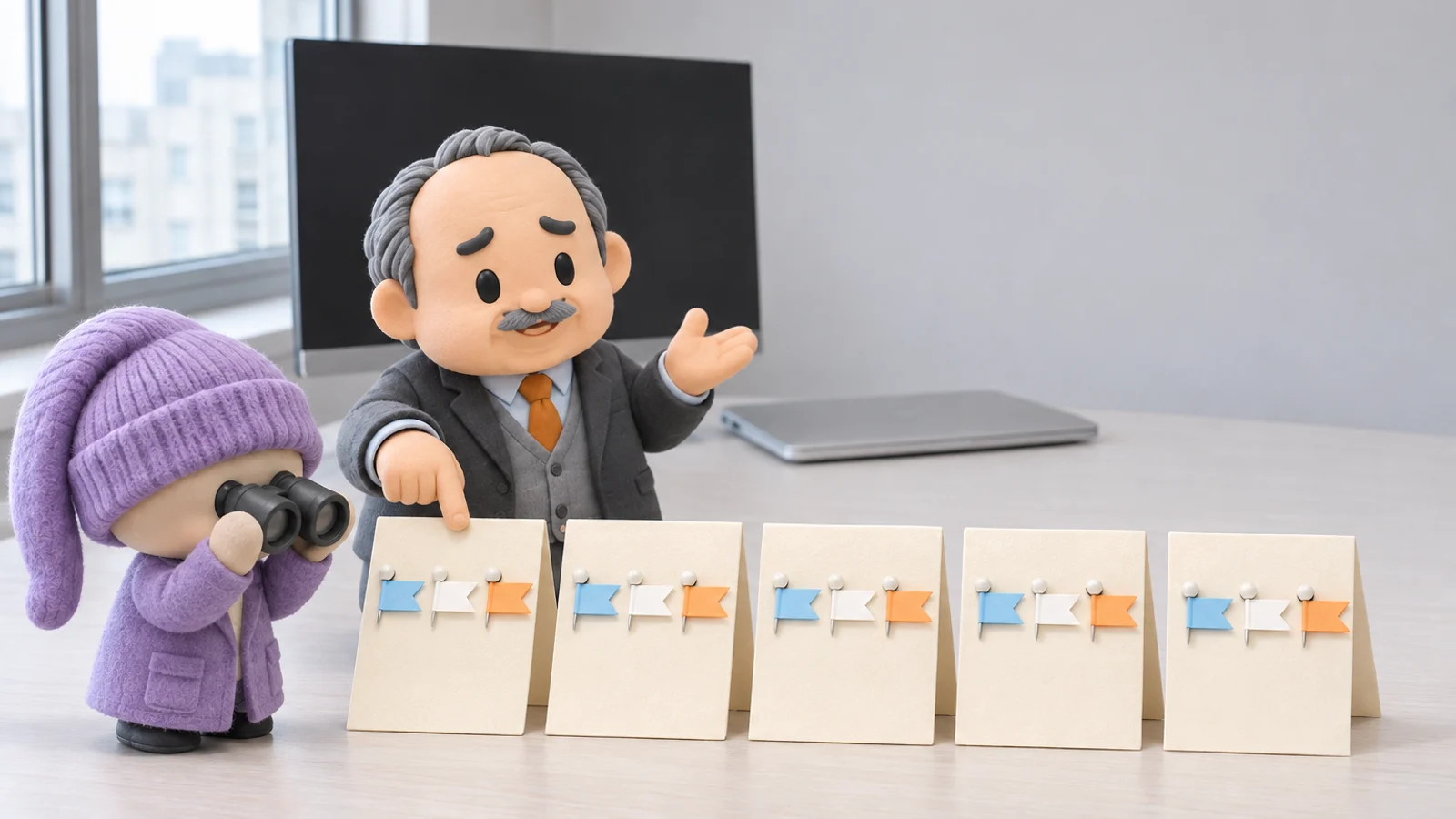
Automate & Augment (A&A), the company writing this article, sees a sermon as “one talk a single person prepares and gives every week.” In a B2B company, the closest thing is the explanation the owner repeats in every sales meeting. An explanation given that often already holds the owner’s judgment about what to recommend and when.
A&A perspective
Churchgoers, however, already trust their pastor. B2B prospects comparing vendors stand in a different relationship, so the only thing to borrow is the step of splitting one talk. The results in the case do not carry over to your company as they are.
A&A perspective
If the explanation is only general industry talk, adding formats will not show how you differ from competitors. In that case, before splitting anything, first draw out the conditions under which the owner changes a proposal.
Hypothetical example
The test can be small. For example, for four weeks the owner records one explanation of about 15 minutes each week and spends 15 minutes checking the table of claims, reasons and limits that AI makes. These numbers are a hypothetical example; each company sets its own.
Have AI first build a table of claims, reasons, limits

A&A perspective
Once you hand over the text of the explanation, do not have AI write an article right away; have it first build a table of claims, reasons and limits. A claim is what the owner stated firmly, a reason is the why or what they saw on site, and a limit is a case where the claim does not apply.
From the sources
In December 2024, Anthropic published a guide for developers on how to build systems that use AI. It recommends starting with the simplest possible setup and adding complexity only when needed.
From the sources
One pattern the guide describes splits a task into fixed steps, where each step takes the output of the one before. Checks can sit between steps to make sure the work stays on target. Its example is to write the outline of a document first, check that it meets certain criteria, and then write the document.
From the sources
A note at the top of the guide says much of the developer tooling it describes has changed since it was published.
A&A perspective
A&A borrows only one idea from the guide: split the work into steps and check in between. The table plays the role of the outline in the guide’s example. With the table done first, the owner does not need to read a long draft end to end and can check a few rows of the table instead. Anything in the table that the owner never said gets deleted here.
Hypothetical example
For example, say the owner of a 20-person commercial air-conditioning maintenance company tells prospects, “Before adding inspections, record why each unit stopped, sorted by cause.”
Hypothetical example
In this example table, the claim is “sort out why units stopped before adding inspections.” The reason is “without sorting the causes, you end up replacing the same part again and again.” The limit is “for units more than 10 years old, start by reviewing how often you inspect.”
Give articles, posts and diagrams each its own reader question

A&A perspective
Once the table is ready, set one reader question each for the article, the social post and the diagram, and only then have AI draft them. If you just cut the same explanation shorter, every format ends up saying the same thing.
A&A perspective
The people who find an article through search are owners comparing companies. Many social media readers skim, and a diagram is what on-site staff look at while they work. A&A’s view is that different readers want to know different things.
Hypothetical example
In the air-conditioning example, the article’s question is “Why do it this way, and when is it different?” The article answers, “Why don’t breakdowns drop even when inspections go up?”
Hypothetical example
The short social post asks “Does this apply to me?” and puts it as “Before setting how often to inspect, did you sort out why units stopped?” The diagram answers “What do I do, and in what order?” and shows “What to record when a unit stops.”
A&A perspective
Making several formats from one talk is the same as in the Pulpit AI case. The difference is that you set each format’s question first and only then have AI write.
A&A perspective
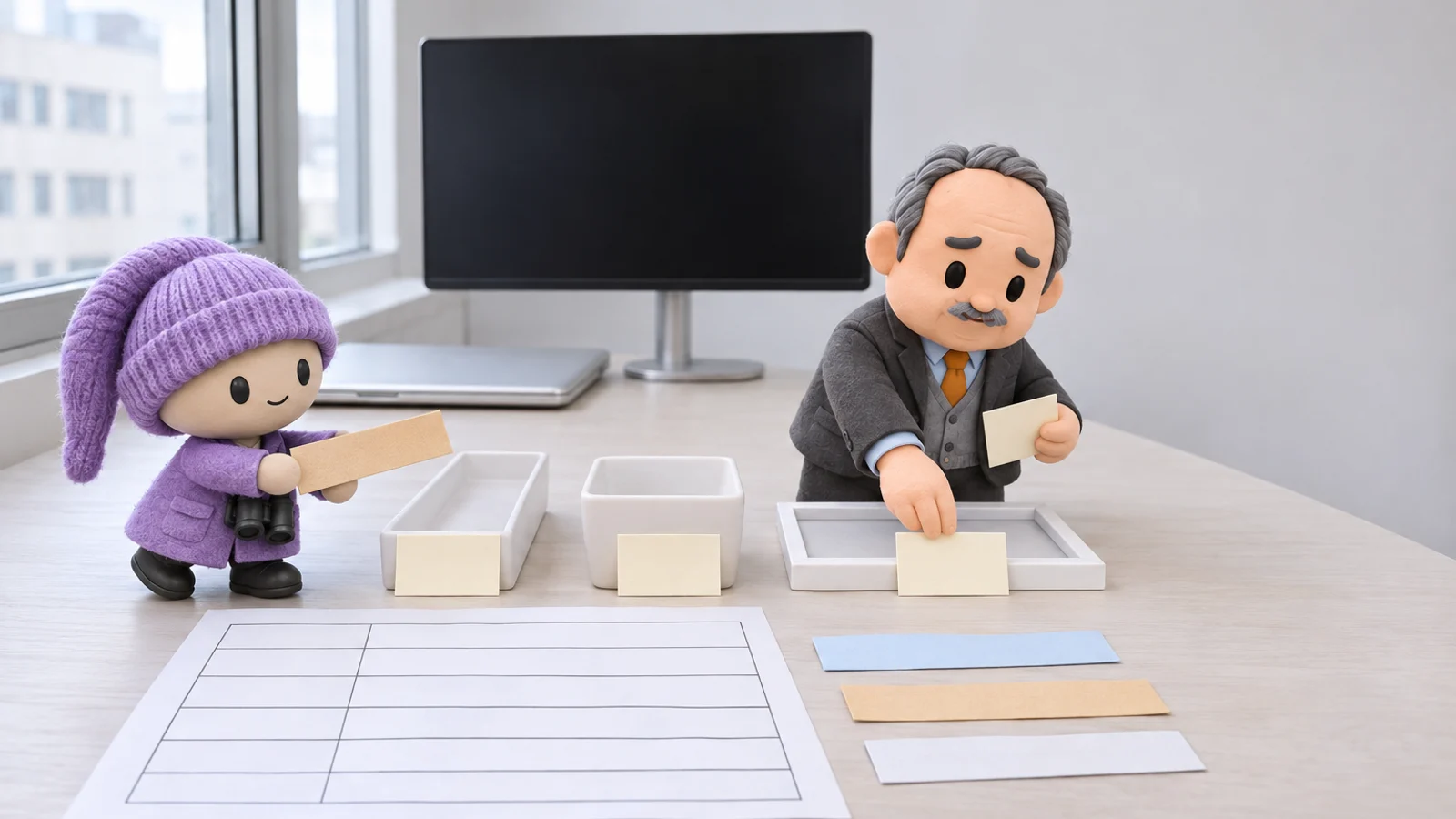
The instruction to AI carries three things: the table, the readers of that format, and the question. With the question fixed, AI can pick the rows of the table that the question needs.
A&A perspective
When text gets shorter, the limit rows are what tend to drop out. If a social post cannot fit the limits, keep the post to the question and leave the limits in the article. For the diagram, have AI draw only the order of the steps and the items to record.
A&A perspective
Setting the questions first lets the formats share the work. The social post raises the question, the article answers it with the limits and exceptions, and the diagram shows the steps. People who come from social media to the article do not have to read the same explanation twice.
Hypothetical example
If you publish within one week, for example, post the question on social media on Monday, the article on Wednesday and the diagram on Friday. The days are a hypothetical example; the order is what matters.
Check drafts against the table and cut unspoken results

A&A perspective
When the AI draft comes back, compare it with the table sentence by sentence and delete any results, figures or customer quotes that are not in the table.
A&A perspective
AI drafts can mix in outcome figures the owner never mentioned or plausible-looking adoption stories. If unspoken results reach an article, the owner cannot answer when a prospect asks about them in a sales meeting.
From the sources
Pulpit AI’s CTO describes what changed after the company switched to Anthropic’s AI. Customers noticed that it could write in the voice of the preacher who gave the sermon, he says.
A&A perspective
A&A’s view is that the more the writing sounds like the owner, the harder it is to spot unspoken results mixed in. What you check against is not the voice but the rows of the table.
A&A perspective
When checking, take each sentence of the draft and find the row of the table it came from. A sentence that matches no row is either deleted or confirmed with the owner and then added to the table. If it is a story from the owner’s own experience, decide before adding it whether a record of that event exists and how much of it can be made public.
A&A perspective
Staff can do the checking. With the table, even someone who did not hear the owner’s explanation can find sentences that are not in it. The owner only decides whether something gets added to the table.
A&A perspective
This check also works if you outsource article writing. When a draft comes back from the agency, comparing it with the table lets you look only for what contradicts the explanation, without rereading the whole thing.
Hypothetical example
After four weeks of testing, decide whether to continue by how long the checks took and whether articles or posts came up in sales meetings. For example, continue if each check took 15 minutes and a prospect said, “I read your article.” This is also a hypothetical example.
Summary
A&A perspective
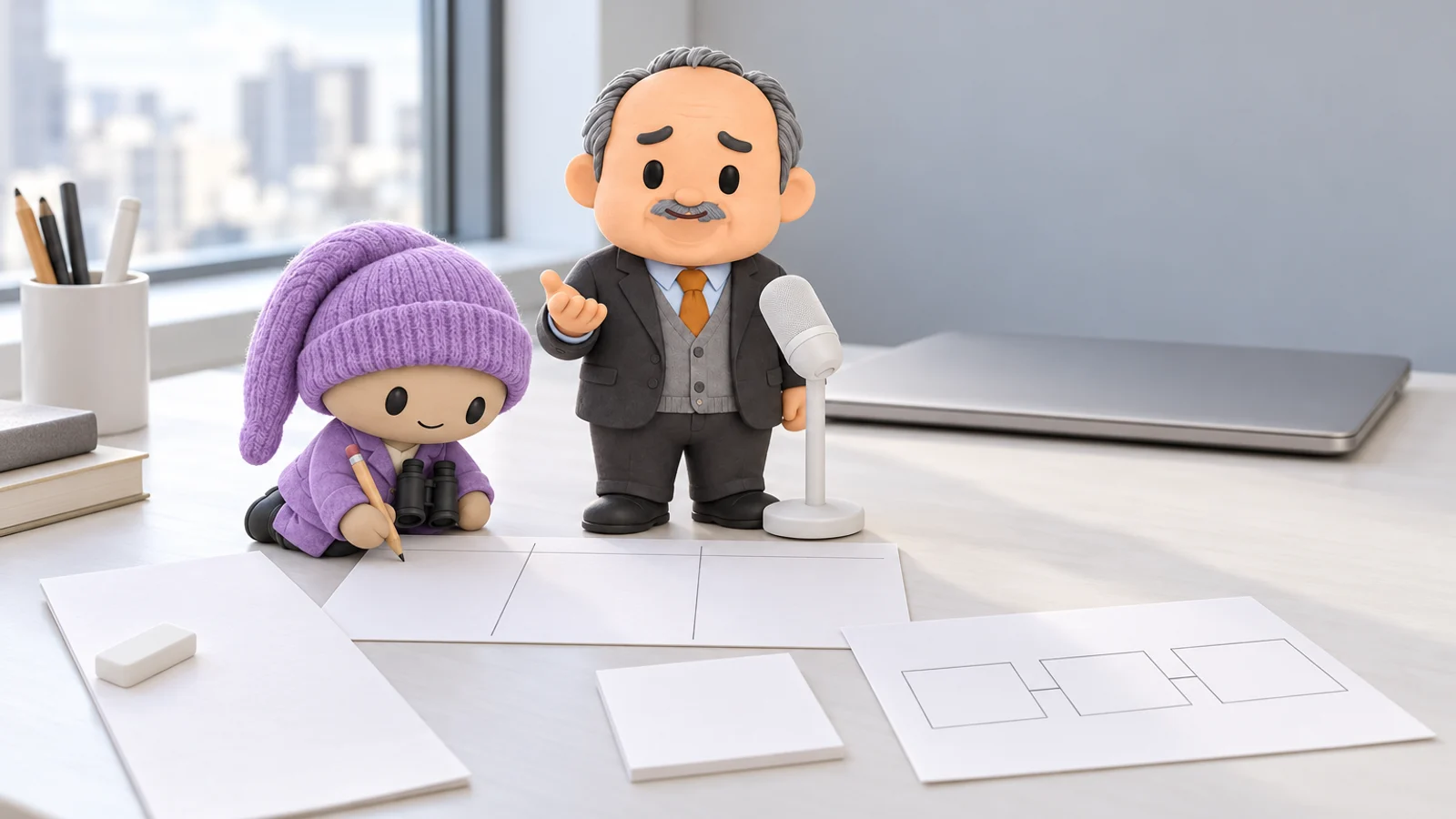
Start with one explanation you repeat in sales meetings. Have AI first build a table of claims, reasons and limits, and the owner checks that table. Make the article, the social post and the diagram around a different reader question each. Compare the drafts you receive with the table and cut unspoken results.
When you split one explanation into an article, a social post and a diagram, what may go into drafts from AI or an agency is set by the table of claims, reasons and limits the owner has checked. What you decide next is which explanation to test with, and how you will judge afterward whether to continue, from how long the checks took and how prospects responded in sales meetings.
FAQ
Does this process work if we outsource article writing?
Yes. Even when the agency drafts with AI, comparing the draft with a table made from the owner’s explanation lets you check whether results the owner never mentioned have slipped in.
Is it cheaper than outsourcing article writing?
This article does not compare costs, because both agency fees and the time an owner can spare differ by company. To compare, set what you pay the agency next to the time the owner spends on recording and checking.
Is it the same process when spreading an existing article to social media?
When you start from an article, see the separate article “Repurpose an article for social and hiring with AI: same facts, new claims.” This article covers the steps when you start from an owner’s explanation that has not been written down yet.
Sources & editorial note
Primary pages read for this article. Publication dates below belong to the sources; access dates record our research.
- Pulpit AI turns sermons into multiple pieces of content with Claude
Anthropic · Publication date not stated
Accessed 2026-10-23 - Building effective agents
Anthropic · 2024-12-19
Accessed 2026-10-23