A&A INSIGHTS
Choosing video creators for an AI product launch: match the demo, not the subscriber count
A new AI service is hard to explain, so people cannot picture using it. When you pick a creator to work with, the deciding test is whether they can demo your product end to end on input their own audience already handles — read through Lovable's creator-scoring fields on Clay and two Anthropic case studies.
日本語で読む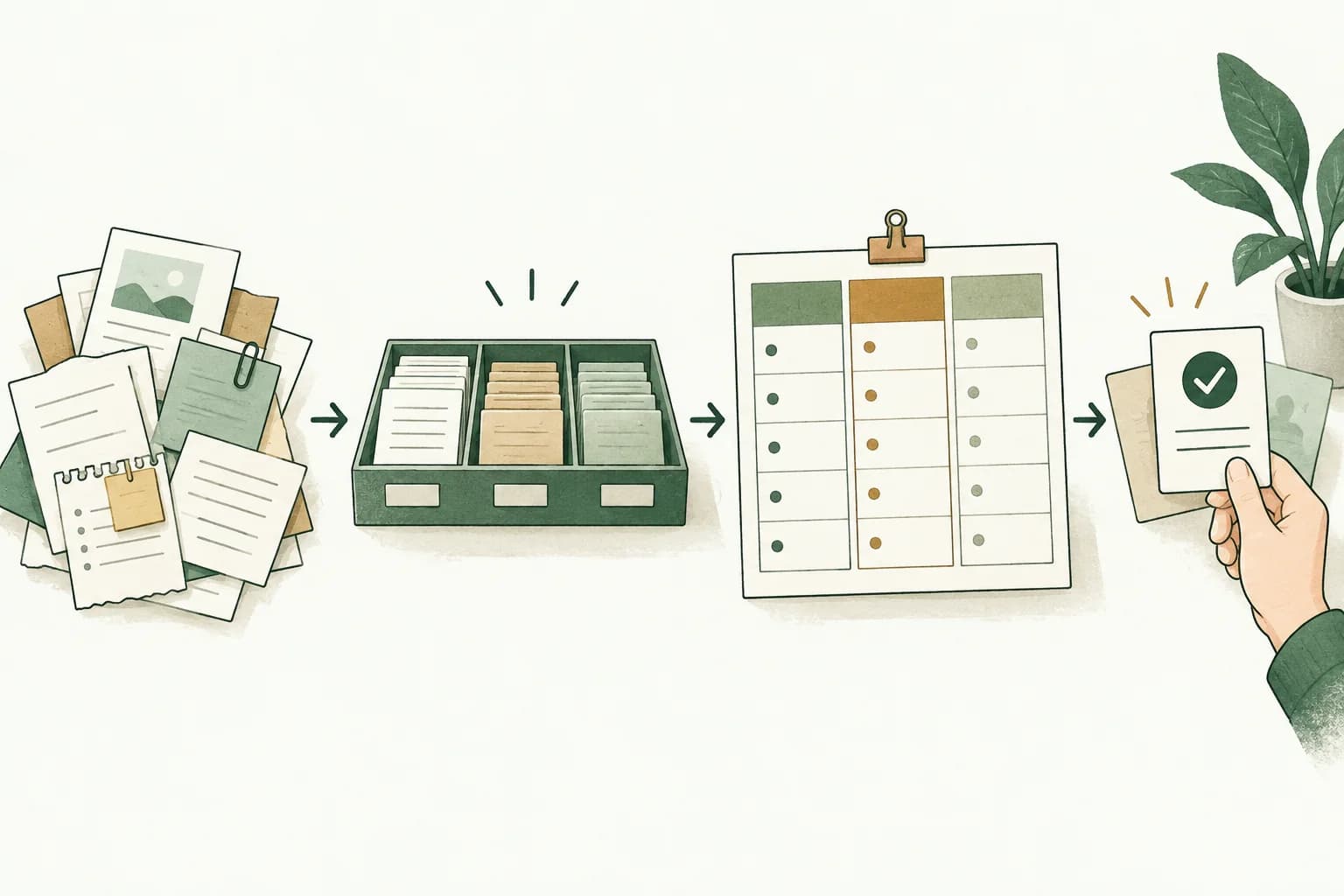
THE STARTING POINT
The argument: for an AI service whose use is not yet understood, choose partner channels by whether a demo is possible, not by subscriber count. Clay's Lovable story lists the five fields gathered per channel — average views, engagement rates, subscriber counts, content themes and audience composition — and the question that decided the score: does their audience match the people who would benefit from an AI app builder? Anthropic's Lovable and Brand.ai case studies supply two further primary statements. From those, this article sets out a four-field candidate card a solo company can fill in without tooling. Source statements, A&A interpretation and a hypothetical example stay separate.
Subscriber count measures reach, not whether the point lands
A&A perspective
If you are working with a video creator to get the first attention for a new AI service, subscriber count is not the first thing to look at. The first thing to look at is whether that person can demonstrate your product all the way to a finished output, using the kind of input their own audience already handles every week. For a product whose use is not yet established, the number of people reached does not convert into the number of people who understood. Reach can be added later; a partner who cannot demo the work will never produce the moment where a viewer substitutes your product into their own job.
From the sources
Clay's published Lovable story explains why creators were the channel. The page says Lovable was creating something genuinely new and that the "vibe coding" category did not exist before it, and then states plainly: "There was limited established market understanding of what an AI app builder could do or who it was for." Against that background, the story says YouTube builders, developers and tech influencers who could demonstrate Lovable in action were the highest-ROI channel for product education and demand generation.
From the sources
The same story is explicit about how heavy the evaluation work is. Because the universe of relevant creators is large and quality varies enormously, it says "manually evaluating each channel for audience fit, engagement quality, and content themes" would consume a team for months. The person who built the system on Lovable's side is Ludvig Widmark, who calls his own role AI Ops Engineer.
A&A perspective
A&A reads this as a statement about sequence. The first problem the story solves is not "whom do we contact" but "what do we establish before contacting anyone." A one- or two-person company has neither Lovable's research infrastructure nor a list of several hundred candidates. What transfers is not the infrastructure but the checklist. Once the fields are fixed in advance, the same judgement works even when you only have five candidates in front of you.
The fields Lovable filled in before reaching out, and the one question that decided it
From the sources
According to the story, Lovable built a Clay workflow that researched relevant creators with channel-level context. The fields it lists are "average views, engagement rates, subscriber counts, content themes, and audience composition." Subscriber count appears in that list, but as one item among the five sitting beside each other, not as the heading the rest hang from.
From the sources
The system then scored each creator against Lovable's ideal partner profile. Two questions are given for that score. The first is "does their audience match the people who would benefit from an AI app builder?" The second is "Is the content quality aligned with Lovable's brand?" The story adds that because the team deeply understood each creator before reaching out, they could have genuine, informed conversations rather than sending generic partnership pitches.
From the sources
On results, Clay writes that the outcome was "hundreds of authentic creator partnerships built by a small team in a matter of days," and that "conversations started from a place of mutual fit rather than cold qualification." These are statements in a customer story that Clay itself published about its own product, not an independent audit.
A&A perspective
A&A's reading is that what a small business can take from this is the scoring question, not the scoring machinery. "Does their audience match the people who would benefit from my product?" is answerable with no tooling at all. When you cannot answer it, the shortage is usually not candidate data. It is that you have not yet put into words whose work your product improves, and in which specific situation. That is faster to fix than it is to widen the candidate list.
| Field to fill | What to write | What an empty field means |
|---|---|---|
| Audience occupation and work | Not an industry label: how often per week the audience handles which document or which screen | If watching their output does not tell you, do not guess the audience composition. Drop the candidate |
| Input available for a demo | Realistic input the creator can supply themselves: past documents, an actual screen, data they already hold | If it only works when you supply the input, what you have is an advertisement, not a demonstration |
| Who receives the finished output | Who in the viewer's workplace receives the result, and what they do with it next | If you cannot name the recipient, the viewer cannot substitute the output into their own job |
| Claims you may make | What you can stand behind, what must not be said, and which steps must be stated as human-checked | An empty field here is not the candidate's problem. Fix the product description before widening the list |
| The pass decision | Whether even one of the four fields above was filled in by guessing | Reaching out with a guessed field leaves you with no record of why you were refused or why it worked |
The users you assumed and the users who actually turned up can differ
From the sources
Anthropic's published Lovable case study records where the company started. In early 2023, co-founder and CEO Anton Osika built a weekend side project to help developers move faster with AI and posted it to GitHub as an open-source experiment. The page states: "It went viral, but the people showing up to use it weren't the developers he had built it for."
From the sources
The same page describes Lovable today as a product that "Serves non-technical founders, teams of all sizes, and large enterprises including Microsoft, Uber, HubSpot, and Zendesk."
A&A perspective
Placing those two statements side by side, A&A adds one premise to partner selection. If you search for candidates whose audience resembles the customer you assumed, then when the assumption itself is wrong you scale the wrong assumption. This is where a demo-possibility test earns its place: a demo only works if it runs on input the audience actually brings. So the work of checking "can this person demo it" doubles as the work of checking who can really use the thing. That connection is A&A's reading of two separate source statements, not a causal claim either source makes.
What you hand a partner is a working input and a stated boundary, not a deck
From the sources
In Anthropic's published Brand.ai case study, co-founder Michael Carter says: "Today's brands exist as a massive mosaic of digital touch points, different narratives, and experiences that can't be contained in a static guideline document." The page explains that the traditional approach of static brand guidelines created by agencies no longer works in a world of constant content creation across global teams.
From the sources
The same page states that the company's system "Enables one copywriter to manage 600 pieces of content." This is Brand.ai describing itself on a page published by Anthropic; it is not an independently verified measurement.
A&A perspective
The source is talking about enterprise brand operations, not creator partnerships. What follows is A&A's transposition and should be read as such. Handing a creator a long explanatory deck does not govern what actually happens on screen. What is worth handing over is a short boundary with three parts: first, a procedure that genuinely runs on input the creator's audience already has; second, the claims you can stand behind; third, the claims that must not be made, and the steps where you require a human to check the output. The lever is the clarity of the boundary, not the length of the document.
The partner-candidate card: four fields and when to pass
A&A perspective
Before comparing candidates, fill in four fields for each one: the audience's job and daily work, the input available for a demo, the person who receives the finished output, and the range of claims you are allowed to make. The table below is an arrangement A&A assembled from the sources used in this article; it is not a translation of any table in those sources. Fill it from the bottom, not the top. The last field — the claims you may make — is the only one decided by your own product description rather than by research into the candidate.
Hypothetical example
Here is a hypothetical filled-in example. It is not a real customer and not a partnership A&A carried out; it exists to show how the fields are used. Suppose the product is an AI service that extracts line items from quotation PDFs into a single table. Candidate A is a general AI-commentary channel with 120,000 subscribers. The audience's occupations are mixed; the creator has no realistic input of their own; who receives the finished table is unknown; the permitted claims cannot be stated. Three of the four fields would have to be guessed. Candidate B is a 4,000-subscriber channel about operational improvement for the construction trades. The audience is back-office staff and site supervisors at building firms; the demo input is quotation documents the creator has handled before; the finished table goes to whoever does the bookkeeping; the claims are permissible as long as the video states that a person checks the extracted values. Only B fills in. The point of the hypothetical is not that the smaller channel is better. It is that if you reach out while any field is still a guess, you will not afterwards know why you were turned down, or why it worked.
A&A perspective
Deciding the pass conditions in advance makes the judgement fast. A&A suggests three. The creator has no input of their own that a demo could run on. You cannot say who in the viewer's workplace receives the finished output. You cannot put into words the claims you are allowed to make. When it is the third one that is empty, the problem is on your side, not the candidate's: fix the product description before enlarging the candidate list.
Confirm with one before you contact many
From the sources
In the Clay story, Ludvig Widmark describes the approach this way: "You can validate what works and what doesn't. When something hits, then we start adding volume." The story frames the creator-partnership programme itself as run on his general method — approach it as an experiment, start small, test the hypothesis, iterate on what works, then add volume.
A&A perspective
A&A reads this as meaning that a solo business should use only the first half. Run one. What you observe from that one is not the view count but what happened afterwards, in three specific places: whether the questions that arrived from viewers are about the use your product is for; whether the occupations behind the inquiries match the occupations you wrote in the four fields; and where in the demo the creator got stuck. That third observation is material for fixing the product itself, not just its description.
A&A perspective
It is worth writing down in advance what one run cannot tell you: the right level of compensation, whether an ongoing partnership is viable, and whether the result repeats on a different channel serving the same occupation. None of those can be judged from a single case. Confusing them with a positive signal is how you decide something "hit" and then miss when you add volume. What one run settles is narrower: whether this demo landed with viewers in this occupation.
Where this selection method does not work, and what to do next
A&A perspective
Three limits. First, the Clay and Anthropic case-study pages are all vendor-published accounts, not independent audits; do not carry a figure such as "hundreds in a matter of days" across as a forecast for your own business. Second, Lovable was a product with demand already at scale, and that scale is part of why creators had a motive to demo it at all. For a product nobody has heard of, plan your candidate count on the assumption that being turned down is the default outcome. Third, this method only holds when your product reaches a finished output in a short sitting. For a bespoke service that takes weeks to deliver, no demo can be constructed in the first place, and referrals or individual proposals fit better.
A&A perspective
This article did not check Japanese market rates for such partnerships, the usual compensation structures, or the legal disclosure obligations that apply when content is sponsored. Confirm the current rules yourself before entering a paid partnership. This article is also A&A's reading of primary sources, not a record of a creator partnership A&A has run.
A&A perspective
The next step is to fill in the "claims you may make" field first. Once that is settled, the other three fields can be completed by researching each candidate. If you want the whole sequence first, read "AI-native GTM: a practical guide for solo founders and small teams"; if it is still unsettled whom you are selling to at all, read "What a small team should research with AI before meeting its first customers" before this one. How to split inquiries arriving from a partnership between self-serve and a tailored proposal is covered in "Don't Route Every AI SaaS Inquiry to a Sales Call: Separating Self-Serve From Tailored Proposals". If candidate hunting keeps going while the use you are selling remains undecided, that is the situation an advisory conversation is for.
Subscriber count is usable as an estimate of reach. But for an AI service whose use is not yet understood, the number of people reached is not the number of people who understood. The deciding test is narrower: can this person demo your product to a finished output, on input their own audience actually handles? Do not reach out while any of the four fields is still a guess. That alone is what turns the time you spend into something you can judge afterwards.
Sources & editorial note
Primary pages read for this article. Publication dates below belong to the sources; access dates record our research.
- How Lovable uses Clay to scale one of the fastest-growing startups in history
Clay · undated customer-story page; no visible publication date
Accessed 2026-09-23 - Lovable helps anyone create software 20x faster with Claude
Anthropic · undated case-study page; no visible publication date
Accessed 2026-09-23 - Brand.ai uses AI to make brands more human with Claude
Anthropic · undated case-study page; no visible publication date
Accessed 2026-09-23
AI-assisted editorial production
A&A uses AI for research, writing, translation and editorial checks. Source facts, our analysis and hypothetical examples are labeled separately.
Editorial check: 2026-09-23