A&A INSIGHTS
Turn solo-founder sales into a weekly system: keep buyer-specific reasoning alive while shipping
Solo founders cannot solve sales by sending more messages. Using the Lindy customer story on Claude and the Lovable customer story on Clay, this article proposes a weekly workflow that keeps buyer understanding and proposal improvement moving while the founder is still delivering paid work.
日本語で読む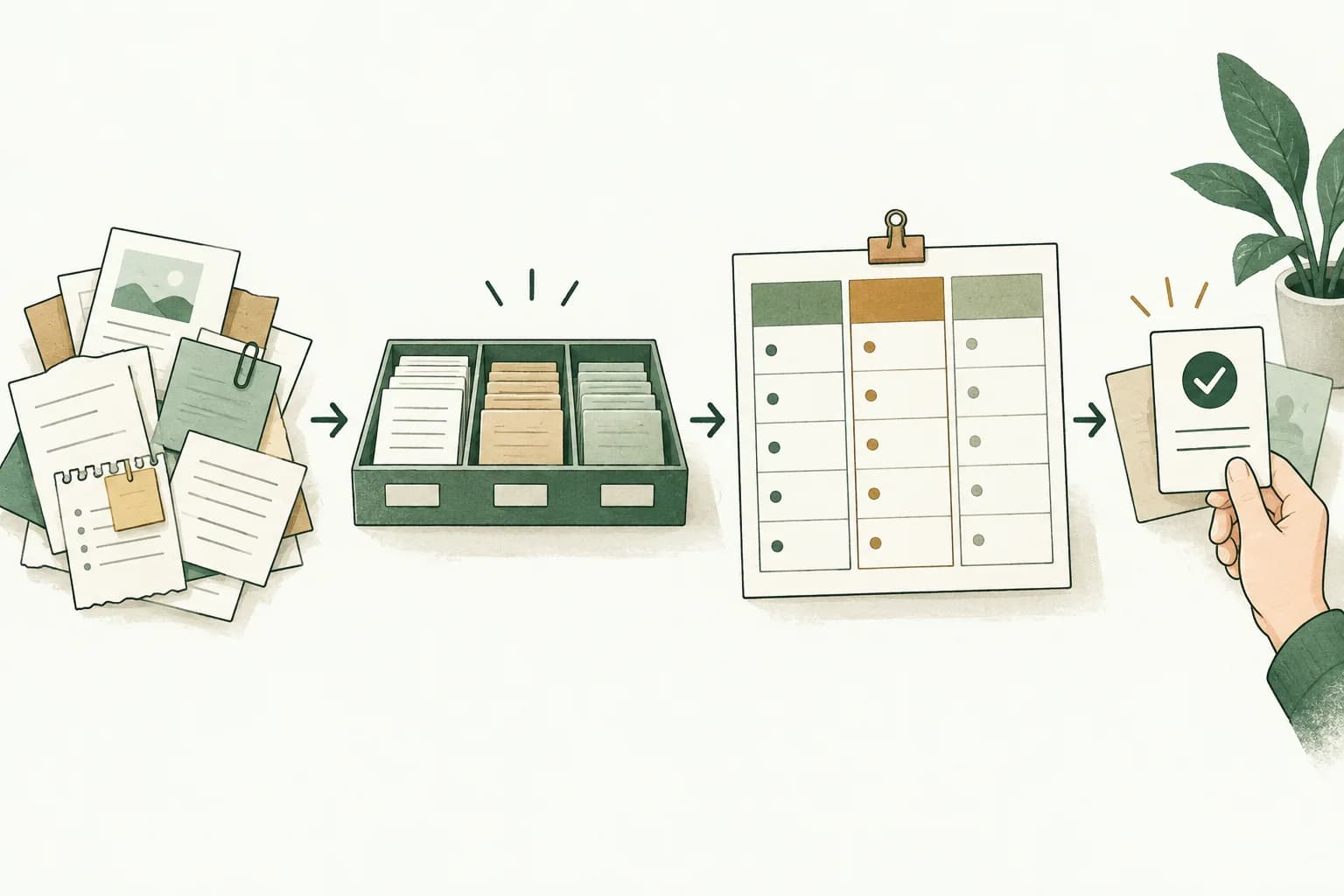
THE STARTING POINT
For a solo founder who both builds and sells, the difficulty is not writing more emails; it is keeping the reason to contact each buyer alive while paid delivery consumes the week. This article uses two overseas customer stories, Lindy on Claude and Lovable on Clay, to separate the work AI can support from the decisions the founder must keep. Numbers reported in those stories are vendor accounts and are not evidence that a Japanese solo firm will see the same outcome. Facts, interpretation and a hypothetical weekly layout are marked separately.
Split the week where sales stops when delivery starts
A&A perspective
When a solo founder personally builds or codes what the business sells, sales work almost stops in weeks when a project is running. By the following week, the queue of possible buyers has not moved and the business is back to waiting for referrals. In that state, deciding to "automate sales with AI" easily turns into a decision to send more messages. The real bottleneck is not the volume of prose. It is the mechanism that keeps a reason to contact each buyer alive while delivery consumes the calendar. What needs to be separated is the workflow. Choosing a reason to contact, reading public information, drafting a proposal, replying, saying no and deciding not to contact are distinct steps. Which of them can be delegated to AI, and which must the founder still perform this week, needs to fit on a single page. When it does, sales can be touched in fifteen-minute blocks even while shipping. Without that separation, blanket automation produces weak inbound that consumes the founder's day. This article uses two overseas customer stories as reference material. Read them as shapes to compress and adapt, not as recipes to import.
Lindy on Claude: which steps a sales agent takes and what the salesperson keeps
From the sources
The Anthropic customer page for Lindy states that AI agents built on Claude "Book 40+ prospect meetings monthly while sales reps focus on high-value conversations," describing a division of labour in which agents handle scheduling and initial contact and salespeople stay on higher-value conversations. The same page reports that time-to-qualified-lead is reduced by 72% for sales teams, framed as an outcome of the sales workflow. This is a vendor-hosted customer account authored by Anthropic and Lindy; it is not an independent audit. Numbers are aggregated from Lindy's customers and are not evidence that a solo firm will see the same result.
A&A perspective
For a solo founder, the useful takeaway is not the numeric claim but the division of labour: repeated preparation tasks are pushed to the agent so that the human can concentrate on the conversation itself. In a solo setup, the split is necessarily coarser than in a team, and what can realistically be handed to AI is closer to "arrange the facts I already have" and "produce a short public-source excerpt." The judgement about how to propose to a particular buyer, and the words used in that proposal, stay with the founder. What the agent must also produce is the paper trail: which URL was read, when it was updated, and which claim came from which paragraph. Forty prospect meetings per month is not a solo target. Three well-supported conversations per week is a more honest one, and the same discipline about paper trail still applies.
Lovable on Clay: assemble context on arrival, then match a human
From the sources
The Clay customer page for Lovable describes an inbound workflow. When a prospect submits the enterprise form, Clay researches the company in real time: industry, the person's role, whether an existing relationship exists, and what the company's current priorities are likely to be, and matches the prospect to a specific representative. The page quotes Ludvig Widmark, Lovable's AI Ops Engineer, saying "Clay helps us understand their company and what they care about," and that prospects are "matched with the most relevant person on our team." The page states that "Reps receive a pre-built brief for every meeting" containing who the company is, what tools they use, likely problems and which Lovable products are most relevant. On the recruiting workflow, the page says "The human is always in the loop": recruiters review the research and make every outreach decision themselves. The same page quotes Widmark saying "I basically try to 10x everyone with AI," positioning Clay as an execution multiplier for individual operators rather than a replacement. This is a vendor-hosted customer account authored by Clay; it is not an independent audit.
A&A perspective
In a solo firm the routing target is one person, so the useful borrowing is the idea that context should already be assembled at the moment of contact. When an inbound message arrives, or when the founder is choosing which prospect to approach that morning, AI should pull the buyer's business focus, recent change, plausible fit and no-go topics from public sources before the founder writes anything. The reply is written while looking at the brief. A brief that cannot be filled with real facts is a signal to pause: this prospect is not ready to hear from you yet. The human-in-the-loop stance also matters more when the operator is one person. A generic reply that could go to anyone weakens the reason for contact. Time spent reading the brief and deciding not to reply this week is still sales time. It should be scheduled, not squeezed.
A weekly layout for a solo firm (hypothetical example)
Hypothetical example
Consider a hypothetical solo consultancy in its third year that delivers AI-assisted software work. This is not a report of a real client's results. The week is divided into three bands: delivery, sales and learning. Each band has fifteen- to sixty-minute blocks. The sales band contains four steps. The first step is prospect-sheet maintenance: AI drafts each row with company name, URL, recent public information and the date of the source; the founder writes a one-line reason to contact. The second step is inbound brief: on the day an enquiry arrives, AI compiles a one-page brief with the company profile, technologies in use and candidate references from the founder's own delivered work; the founder reads the brief in full before replying. The third step is existing-customer follow-up: for delivered projects only, AI proposes a few possible conversation openings from the customer's public activity in the past month, and the founder sends one reply. The fourth step is a no-contact log: for each prospect not being approached this week, record why (insufficient evidence, mismatched fit, timing) so the reason travels into next week's sheet. In the learning band, AI summarizes replies, non-replies and declines from what was sent; the founder chooses exactly one insight to feed back into the prospect sheet. This layout replaces "messages sent" with "buyer-specific reasoning updated" as the weekly indicator. Numeric targets and outcomes here are illustrative and are not observed customer results.
Separate where AI helps from where the founder must decide
A&A perspective
The difficult part of dividing this work is stating in advance which steps the founder will always do by hand. In the design proposed here, four steps stay with the founder. The first is articulating the reason to contact: AI may sort the facts, but the one-sentence reason is written by the founder. The second is the decision not to send: even when AI has drafted a plausible message, a weak evidence base means the prospect returns to the sheet rather than moving to send. The third is price and scope: past terms for similar work are not transferred verbatim to a new buyer. The fourth is politely declining out-of-scope enquiries, because forced acceptance quietly damages delivery for existing customers. What can be handed to AI includes extracting and citing public information, filling internal templates, drafting reply text and producing asynchronous summaries. The exact line depends on the business, but a workable rule for a solo firm is: keep with the human every decision that materially affects per-project gross profit and the founder's own available hours. Automating past that line generates more inbound than one operator's judgement can absorb.
Record what the released time was actually spent on
A&A perspective
"Preparation time halved" is not, by itself, a business result. What is needed is a record, split into at least three categories, of where the released time actually went. The first is delivery time: whether existing projects finished earlier or gained more room for quality review. The second is buyer-understanding time: whether the prospect sheet was updated more often, whether inbound briefs became thicker with real evidence. The third is honest slack: rest, study or thinking that was previously impossible; if the released time went there, that is worth recording too. If these categories are mixed together into "sales became more efficient," the founder has no basis for deciding where to reinvest next. Time saved multiplied by an hourly rate is not the same as realized gross profit. In a solo firm this matters directly: more replies without more delivery capacity can slip milestones, and next month's invoicing shrinks. When evaluating AI in sales, compare the change in gross profit and the change in the founder's available hours side by side, rather than counting messages sent or reply rates. Numbers from a hypothetical example must not be treated as measured outcomes; that discipline belongs in the record too.
Start with the prospect decision record
A&A perspective
When discussing implementation, the material to bring is not a request to automate all of sales; it is the record of prospects that were recently hard to judge. For each one, keep a short note of when it was considered, which public source was read, which proposal opening was tried, and why it was or was not sent. That record makes it possible to draw the line between AI-assisted steps and founder-owned decisions on real candidates rather than abstractions. Formats for the sheet, reply templates and inbound brief follow after that boundary is drawn. Starting in this order also makes it possible to argue in specifics about whether existing tools are enough or whether CRM integration is worth the effort. The first useful deliverable is not a stack of drafted messages; it is a decision record that can inform the next candidate. Once it exists, a future collaborator can understand why the firm approached one prospect and passed on another. Automation is best evaluated by whether this record continues to be updated, which matches the reality of a solo firm more closely than any measure of message volume.
For a solo founder, AI in sales is best evaluated not by messages sent but by whether buyer understanding and reasons to contact can keep being updated while delivery continues. Decide which steps the founder must keep in advance, and treat the prospect decision record, not more outbound, as the first deliverable that tells you what is worth automating next.
Sources & editorial note
Primary pages read for this article. Publication dates below belong to the sources; access dates record our research.
- Lindy empowers teams to scale with AI Agents powered by Claude
Anthropic · 2026
Accessed 2026-09-21 - How Lovable uses Clay to scale one of the fastest-growing startups in history
Clay · 2026
Accessed 2026-09-21
AI-assisted editorial production
A&A uses AI for research, writing, translation and editorial checks. Source facts, our analysis and hypothetical examples are labeled separately.
Editorial check: 2026-09-21