What to hand to AI and what people decide: three places for approval
Whether to hand work to AI is not a yes-or-no call for a whole job; decide, step by step, where a person approves.
Key points
- Break sales into 4 steps; AI drafts
- Pick where to approve from 3 points
- Check news later; approve terms first
- Record the split in one 4-column table

Contents
Split sales work into gathering, drafting, deciding and sending

A&A perspective
Decide whether to use AI step by step, not for a whole job at once. A step here means one action inside a job, such as gathering, drafting, deciding or sending.
A&A perspective
Under a job name like "sales follow-up", actions of very different kinds look like one thing. Ask "should AI do our sales follow-up?" and the only answers left are yes or no.
Hypothetical example
Take the job of answering an inquiry with a quote. Pull the items and quantities out of the inquiry, draft a quote by comparing past ones, decide the discount and delivery date, and send it to the customer: that is four steps.
A&A perspective
If gathering or drafting goes wrong, you can fix it inside the company. Deciding and sending are what the customer receives. Within one job, the person hurt by a mistake differs from step to step.
From the sources
Anthropic, a US company that develops AI, published guidance for developers in December 2024 on how to build systems that use AI. It recommends finding the simplest approach possible and adding complexity only when it is needed.
From the sources
It also notes that this might mean not building a system in which AI decides and carries out its own next steps at all.
A&A perspective
Automate & Augment (A&A), the company writing this article, reads the advice to start simple as a reason the choice need not be all or nothing for a whole job. There is a middle path: hand gathering and drafting to AI first, and keep deciding and sending with people.
Put approval before AI acts, before sending, or after sending

A&A perspective
There are three places to put a person's approval: before AI acts, before sending, and after sending. You choose one for each step, not one for the whole company.
A&A perspective
Approval before AI acts means settling in advance which price list and message templates it may use and what it must not do. It suits steps where the conditions are the same every time. You also need a rule that, when the conditions change, the work stops and goes back to a person.
A&A perspective
Approval before sending means a person reviews this particular content before it goes out. Also decide who approves on days the usual approver is off, and what happens to the work while it waits.
A&A perspective
A check after sending means a staff member later picks a few of the items that went out and looks at them. It only works for steps where a mistake can be fixed afterwards.
From the sources
In August 2025, Anthropic published a document setting out how it approaches building systems that hand work to AI. It explains that its own AI tool starts out able only to read, changing nothing, and asks a person for approval before it changes anything.
From the sources
For routine tasks, it says, users can grant ongoing permission in advance so the tool keeps handling them.
A&A perspective
A&A reads the approval requested before each change as approval before sending, and the permission granted in advance as approval before AI acts.
From the sources
In January 2026, Anthropic also explained to developers how to check whether AI really finished the job it was given. When an AI that books flights replies that the booking is done, it writes, the outcome to look at is whether the reservation actually exists.
A&A perspective
When you check after sending, likewise look at what actually reached the other side, not at the AI's report that it was sent.
The same send needs approval in different places for staff and customers

A&A perspective
Even for the same act of sending, where approval belongs depends on whether the recipient will act on the content. Compare sharing news inside the company with offering terms to a customer.
Hypothetical example
Say someone posts industry news to the company chat every morning. AI collects articles, removes duplicates and lists candidates. The person in charge decides where the news goes and how items are chosen, and for the first few weeks reviews the content before it is sent.
Hypothetical example
A wrong link can be fixed by posting a correction. With a rule that nothing confidential goes in, the job can move to picking a few posts to check after sending.
Hypothetical example
In the job of answering an inquiry with quote terms, on the other hand, AI organizes the request and drafts a proposal from the price list. Up to this point it is the same as the news.
Hypothetical example
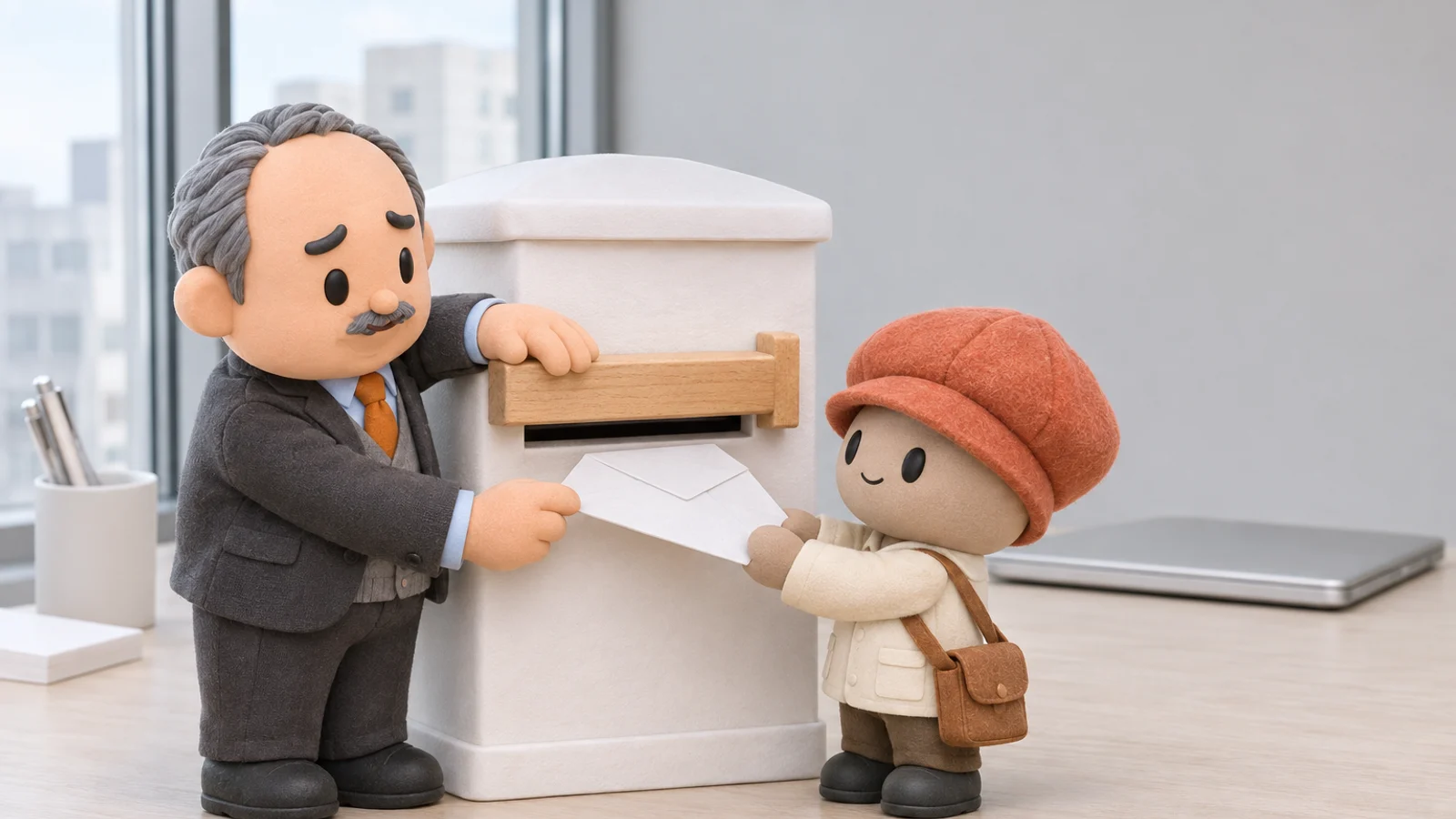
Discounts and delivery dates are different: the customer moves its own plans forward on those numbers. Fixing them after sending adds work on their side and costs trust. So a manager decides the discount and the delivery date before anything is sent.
From the sources
Anthropic's August 2025 document says much of the value of AI comes from its ability to act on its own. It adds that people should keep control over how their goals are pursued, particularly before high-stakes decisions are made.
From the sources
As an example, it describes an AI that manages expenses noticing that the company is overpaying for a software subscription. Before the AI starts cancelling or moving to a cheaper plan, it says, the company would likely want a person to give approval.
From the sources
It also says the right balance between AI acting on its own and people checking its work varies dramatically from one situation to another.
A&A perspective
A&A uses two tests to decide where approval goes. One is whether the recipient will act on the content. The other is whether a mistake can be fixed afterwards.
A&A perspective
Internal does not automatically mean AI can do all of it. When the internal price list that sales uses for quotes is updated, a person decides before the change takes effect, just as for customer-facing work.
Keep the split in one table, down to the stop conditions

A&A perspective
Keep the split you decided in one table with four columns: step, AI's part, people's part, and stop condition. Instead of "AI replies", write "AI drafts the reply, the manager decides the discount, and a staff member sends it."
Hypothetical example
For a quote in reply to an inquiry, that comes to four rows: AI gathers the details and drafts the quote, the manager decides the discount and delivery date, and a staff member sends it.
From the sources
Anthropic's December 2024 guidance also describes AI pausing partway to ask for a person's judgment, either at checkpoints set in advance or when it runs into a blocker.
A&A perspective
A&A reads these pauses as what belongs in the table's stop-condition column. A step for which you cannot write a stop condition is not yet ready to hand to AI.
Hypothetical example
For a draft quote, for instance, write: "If an item is not on the price list, do not draft; return the inquiry to the staff member."
A&A perspective
When you change how much you hand over, compare the same kind of inquiry handled by people alone and handled by people correcting the AI's draft. Count not only drafting time but also the time spent checking and fixing.
A&A perspective
If staff rewrite almost every draft, narrow what AI does. When you remove an approval, write the reason in the table.
A&A perspective
With the table in hand, the next time you hand more to AI you can discuss it in terms of whose judgment moves where.
Summary
A&A perspective
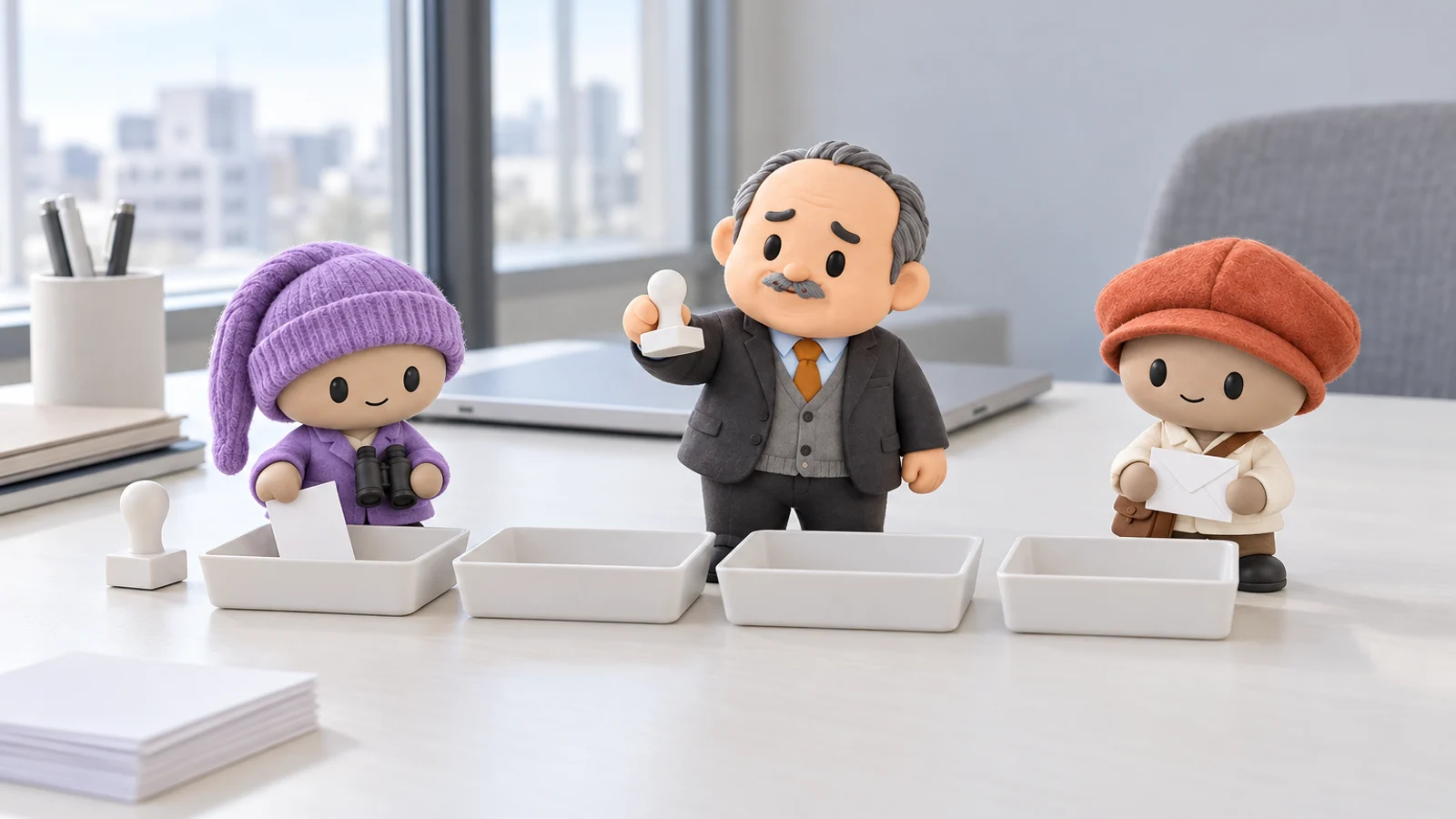
Break sales work into four steps and hand gathering and drafting to AI first. For each step, choose where a person approves from three places: before AI acts, before sending, and after sending.
A&A perspective
Internal news can move to checks after sending, while a person decides customer discounts and delivery dates before sending. Keep the split in one table, down to the stop conditions.
Whether to hand work to AI is not a yes-or-no call for a whole job; decide, step by step, where a person approves. Choose the place by whether the recipient acts on the content and whether a mistake can be fixed afterwards, and keep the split in one table, down to the stop conditions.
FAQ
Doesn't keeping approval defeat the point of using AI?
No. People look only at the deciding and sending steps. The work of gathering and drafting moves to AI, so using AI still pays off with approval kept.
Does this split work with ChatGPT alone?
Yes. Ask ChatGPT for everything up to the draft and have people decide and send; that is approval placed before sending.
Which job should I hand to AI first?
One where you can judge for yourself whether the result is good. How to choose it is covered in "Starting AI in small business: begin with one task you can judge yourself".
Sources & editorial note
Primary pages read for this article. Publication dates below belong to the sources; access dates record our research.
- Building effective agents
Anthropic · 2024-12-19
Accessed 2026-10-22 - Our framework for developing safe and trustworthy agents
Anthropic · 2025-08-04
Accessed 2026-10-22 - Demystifying evals for AI agents
Anthropic · 2026-01-09
Accessed 2026-10-22